1. Airports
1.1. (Smart) Border
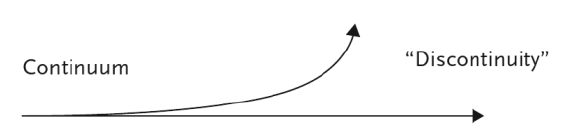
We live in a world of borders. English 'Border' is derived from the Proto-Indo-European (PIE) root bherdh- (“to cut” or “divide”), often cited as the ultimate root, reflecting the idea of dividing or marking territory.a 1 In the 21st century, hundreds of new borders have been created around the world in contrast to the celebration of globalization and the increasing demand for global mobility. Modern borders are not just physical walls or fences.a 2 The most powerful borders are ‘imperceptible’ means of control, such as data borders. The data border can also be referred to as a smart border in other words. The goal of the ‘smart’ border is not to manage the border in a humanistic way but to track and block movement in real time with high-tech surveillance systems.a 3 The side effects of this increase the mortality rate of border crossers and exacerbate social inequality. In the United States, there were people who lost their lives trying to avoid the police when the Chinese Exclusion Act (1882) was passed.a 4 It is created by people and intensifies extremism by strengthening exclusive nationalism. Border changes accumulate, and they become apparent when they cross the bifurcation.a 5 After events such as 9/11, COVID-19 immigration restrictions and the Schengen Agreement are a process of reinforcing and coordinating circulation. Anyone can be deported by changing inclusion and exclusion at any time.a 61.2. Space/Access
The border of the airport exists in illusion form made out of straight lines and doors. Here, it functions as a special environment in which people must deviate from everyday norms or relationships for a while and follow new rules.a 17 In French anthropologist Marc Augé’s book, An Introduction to Early Modern Anthropology (1995), he contrasts ‘place’ with ‘non-place’ and defines airports as typical ‘non-places’. According to him, it exists as spaces that lack identity.a 18 Airports are testbeds and function as the first places where innovations in security systems, legislative exceptions, and supranational authority are trialed and introduced, representing the early stages of change that will spread to cities, countries, and the world.a 19 While these advanced technologies and strict regulations ensure efficient flow and safety, the airport continuously collects and records specific information to turn users into ‘passengers’ roles. In this process, we are classified as ‘movers’, individual civil rights and protection can be limited by the efficiency of the system. However, not all passengers are treated equally. We are divided into mobility qualifications according to citizenship and socioeconomic status, some pass through simple screening, and others experience more processes.a 20 Due to these differences and standardization of data reading procedures, people of the global LGBTQIA+ communities, stateless,a 21 and undocumented immigrants can be simply identified as binary data, resulting in more marginalization.a 22 This is a prime example of the dynamics of power operating within the space of an airport.a 23During the COVID-19 pandemic, getting a certification to have the data ‘healthy’ was the only way to cross the border rather than the fact that I was physically healthy. It has accelerated the non-face-to-face digital authentication system.a 24 Automated immigration screening is boosted in each country, data-based real-time tracking systems are being expanded with the aim of contributing to protecting the safety from public health and unverified migration in one’s own country.a 25 The European Union plans to implement the EES system for non-EU travelers from 2025. EES stands for Entry/Exit-system which allows the travelers to shorten their time at border checkpoints and automatically monitor them to cross borders by systematically identifying individuals staying in the Schengen area for long periods. For this reason, people in non-EU must provide biometric data when entering and leaving the Schengen area.a 26
The EES collects, records and stores:
1. Data listed in your travel document(s)(e.g. full name, date of birth, etc.)
2. Date and place of each entry and exit
3. Facial images and fingerprints (called ‘biometric data’)
4. Whether you were refused entry.a 27
We can’t define physical presence and identity as digital identification systems are categorizing us. Biometrics technology is more than just a tool for security, creating systems that reflect ethnicity.a 28 For example, 3D face recognition algorithms capture and calculate facial feature points using mathematical formulas such as Euclidean distance and Geodesic distance.a 29 However, in a way that prioritized white skin and feature in its initial design, this formulas created the problem of not accurately recognizing ethnic minority faces.a 30 Despite higher identification thresholds were required than Caucasian faces to achieve the same false acceptance rate (FAR).a 31 This suggests that exclusions from technological advancements reflect social biases. Currently, for reasons of efficiency and equality, it has been improved to develop into a system containing more ethnic group,a 32 but the bias of the people who make decisions about processing the data still remains.a 33 People are being profiled and defined as different in certain societies.a 34 It can be an intention to maintain a white-centered social system and a homogeneous ethnic society based on a uniform ethnic background.a 35 We continue to be ‘data exiles’ in certain areas for political and technical reasons, without being given enough transparent information about how our data is screened for security reasons.a 36 This justifies and conceals the validity of our right to know.
Hito Steyerl’s works reflect the political and social situation and explore the problem of constraints. How Not to Be Seen: A Fucking Didactic Educational.MOV File (2013) paradoxically shows that in a world where all our private and public data are collected semi-forced, we are intertwined with the data of our society and the spread of visual surveillance.a 37 This eventually suggests that even if people cross physical borders in special free economic/trade zones, such as airports, they are still othered and trapped inside borders in a different way than goods. People have used sophisticated methods to cross borders in various forms. The way people are hidden in goods has tended to increase more noticeably as data surveillance becomes more advanced.a 38 Will attempts to avoid data tracking also become more invisible and secretive?